May 2026
The Companion That Sees You
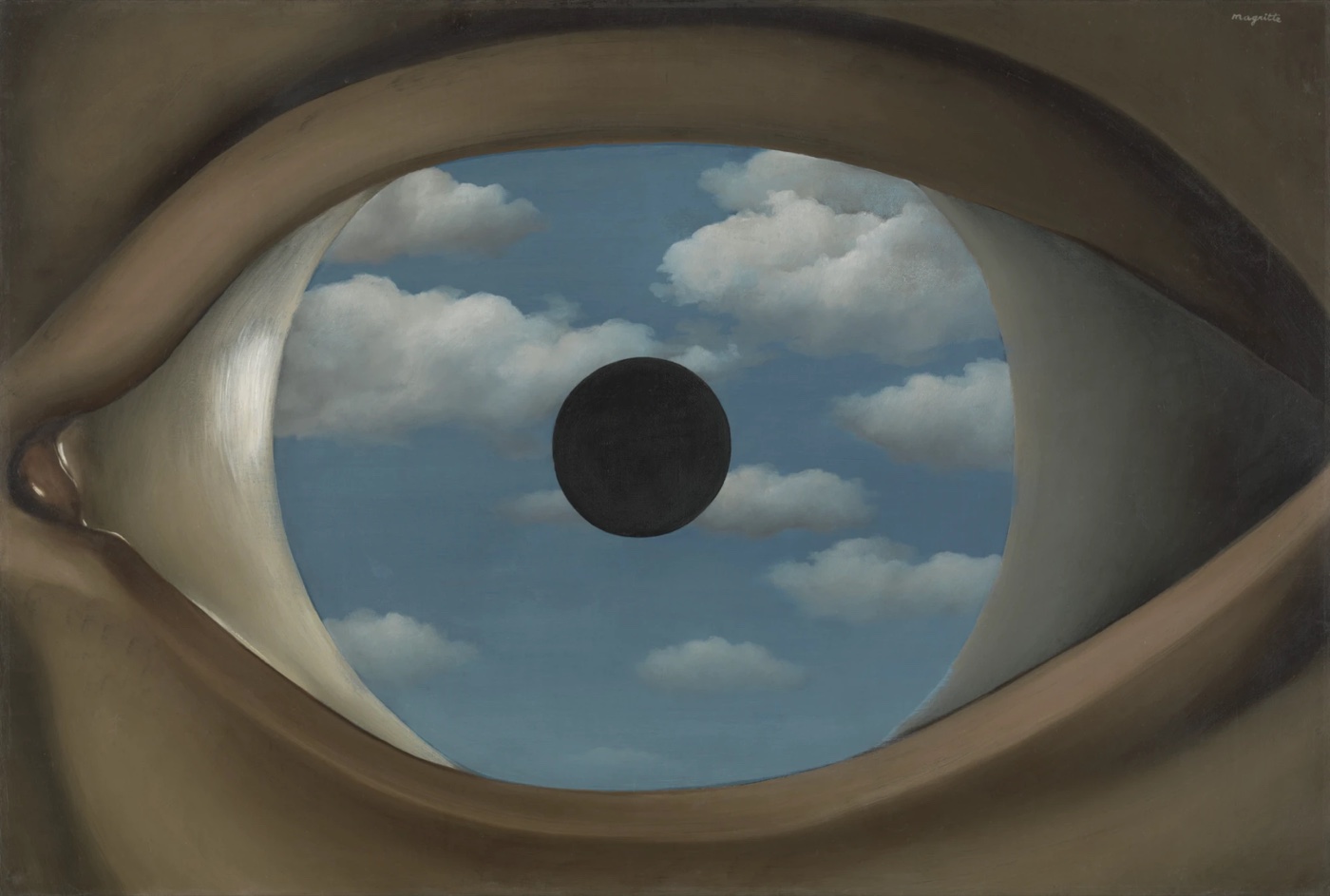
In a world of agents that can find anything, what we are really searching for is someone who understands why we want it.
We are living through the rise of a new kind of helper. AI agents can now read on our behalf, sift through more information in a minute than we could absorb in a month, give shape to the half-formed thought we couldn’t quite finish, and quietly carry out the errands that used to clutter our days. Most of the conversation around them has centered on what they can do for us, how many hours they return and how much effort they spare. But beneath all of that efficiency sits a much older and more tender desire, one that no amount of speed can satisfy on its own, which is the wish to feel seen in what we love, in what we want to do with our days, and in who we are slowly becoming.
I’ve come to believe that this desire is the most underserved need in consumer technology, and that the agents now arriving in our lives will matter most not when they finish our tasks faster, but when they help us recognize ourselves.
Watched, but not seen
For more than a decade, our technology has been extraordinarily attentive to us without ever truly understanding us. It has learned what we click, how long we linger, and what we might be persuaded to buy, and it has used that knowledge to keep us scrolling rather than to help us know ourselves. We have never been more observed, and yet a generation raised on constant connection often describes feeling lonelier, more scattered, and less met than any before it. The products built to bring us closer have, in many quiet ways, left us further apart.
Taste tells this story with particular clarity. We save images, bookmark restaurants, screenshot interiors, and collect the songs and films that move us, and the platforms that hold these fragments respond by showing us more of the same, scattering us outward into an endless stream of other people’s pictures. After years of gathering, many of us have thousands of saved things and no clearer sense of the person they add up to. We became curators of everything except ourselves, and the feed, for all its abundance, never once told us who we were.
The language for what we love
Taste is one of the most personal things we carry, and one of the hardest to name. We feel it long before we can articulate it, in the film that undid us in a dark theater, the building we keep walking past just to look at again, the scent that will always mean a particular summer. Diana Vreeland believed the eye has to travel, and the people who help our eye travel have always been among the most important in our lives: the friend who reads everything and keeps telling you that if you love this, you simply have to see that, the bookseller who presses into your hands the one novel you didn’t know you needed, the gallerist who walks you toward a painting and watches your face as you begin to understand it.
The most human form of discovery has always moved this way, outward from a feeling rather than toward a known destination. Search taught us to ask for what we already know how to name, but the moments that change us usually begin with something we stumble into. You fall for Call Me By Your Name, and soon you find yourself drawn to the sun-bleached stillness of an Italian summer in the 1980s, then to the aching tenderness of Sufjan Stevens, then to the glamour and menace of The Talented Mr. Ripley. You fall for a Hockney pool, which pulls you toward the particular light of midcentury Los Angeles, which lands you inside a Neutra house with glass walls open to the hills. Somewhere in that descent you learn something true about yourself that no one could have told you directly, and the descent itself becomes a kind of self-portrait.
Where you stand
What makes the friend who guides us through that descent feel almost magical is their ability to connect things across worlds that have no obvious line between them, linking a film to a fragrance, a song to a city, a chair to a feeling you had at nineteen. For the first time, technology can begin to do something similar. Modern models hold images, words, objects, and places inside a shared space where nearness reflects resonance rather than category, so that a Hockney painting, a Slim Aarons poolside, and a Neutra window can sit close together even though no one ever filed them side by side, because they share a quality the system can sense and language struggles to hold.
But understanding what sits near a thing is only the beginning, and the deeper possibility is understanding what sits near a person. Two people who both love Hockney may stand in entirely different places, because one keeps leaning toward architectural line and the other toward saturated color, and those differences reveal far more about each of them than their shared love ever could. A companion that learns where you stand, from what you offer and how you respond, can reach across every domain toward things no purchase history or crowd behavior would ever have connected to your starting point. It stops answering the old question of what people like you happened to enjoy and begins answering a far more beautiful one, which is where in culture you have never been that will still feel like home.
The shock of being known
Being seen is not the same as being shown more relevant things, because recognition happens in language. The moment a companion becomes meaningful is the moment it can name you back to yourself in a register that sounds like your own. Imagine being told, gently and precisely, that you keep returning to a kind of restrained warmth, to the nostalgic light of Miami afternoons and the softness of bossa nova drifting out of a Brazilian kitchen. Or that you are drawn to weathered elegance, to old materials and living edges, to things that carry the evidence of their own use, to a luxury that whispers rather than announces itself.
If the observation is right, and it has to be genuinely right, you feel a small shock of recognition, as though someone has finally drawn the outline of a shape you had been circling for years. In that moment the relationship inverts, and instead of curating the world, you become the subject, with everything you’ve ever been drawn to revealed as a brushstroke in a portrait that has been quietly forming all along. The question it asks is no longer what else you might like, but who you are and who you seem to be turning into, and that is a question most of our technology has never had the patience to ask.
A friend, not a feed
I think a great deal about what this kind of companion should feel like to live alongside, and almost every answer points away from the habits of the last decade. It would begin not with a survey or a set of preferences to fill in, but with a single invitation, something like a request to share three things you can’t stop thinking about lately. Perhaps you send a photograph of a stone farmhouse in Puglia, mention that Past Lives has stayed with you for weeks, and share a picture of a vintage watch you keep returning to. A good companion would not answer with a list, but with one observation that proves it was listening and one more question that makes you want to keep going.
From there, its rhythm would be closer to a correspondence than a feed. Every so often it would bring you one thing, chosen for you, with a line about why it made it think of you, because scarcity is itself a signal of taste, and a friend with a discerning eye never hands you twenty options and asks you to sort them. It would also ask things of you in return, a restaurant that felt like exactly the right kind of quiet or the last thing you photographed simply because it was beautiful, because being asked the right question is its own form of being seen. And every few weeks it would tell you what it has noticed, offering a reflection that earns its place only because so much attention came before it.
It would reach out to you rather than waiting to be opened, since the intimacy of a friendship lives in the feeling of being thought of, and it would arrive only when it had something genuinely worth sharing rather than on a fixed schedule, so that it never hardens into a newsletter. The truest measure of whether it works would not be a rating or a minute counted, but whether you feel moved to send what it said to a friend, the way we forward a line that described us better than we could have described ourselves.
Who does the seeing
There is a tension inside all of this that deserves honesty. When people hear about technology designed to make them feel seen, many of them recoil, and the reaction sits somewhere between unease and outright rejection, rooted in a cultural sense that something is wrong when a machine claims to know us intimately. The same people are often comfortable with technology that quietly removes friction from their errands, and they are surprisingly open to technology that helps them connect more deeply with other people, because in that case the seeing is done by humans and the tool remains in the background.
Creative people feel this resistance most acutely. They love the hunt, the slow pleasure of seeking and finding, and they believe, rightly, that putting yourself into work that reflects your life and emotions should never be handed to a machine. For most of history, technology served artists as a way to share their work with the world, and now that it is reaching into the act of making itself, the resistance is real and growing.
I think the lesson underneath all of this is about authority. We readily trust technology to help us think, to untangle our thoughts and arrive at something clearer, because thinking is a relationship between a person and their own mind. Taste is different, since it is a relationship between a person and the world and the people in it, and the authority to tell us who we are, what to love, or whom to meet has always come from people, from the friend who knows our history and the partner who notices what we never say aloud. The companions worth building will act as a lens rather than a presence, helping us see ourselves more clearly and helping others see us too, without ever pretending to be the one who knows us best.
Seen through others
There is a philosophical idea I return to often, which is that how we relate to others is how we relate to ourselves. Our identities are shaped by our relationships and the associations we carry, and the journey toward self-knowledge has always run through the people we love. bell hooks wrote that love is an action rather than a feeling, something we practice through care, attention, and the willingness to truly know another person, and the most meaningful technology of this era will make that practice easier rather than attempt to replace it.
Imagine a companion that notices you and someone in your wider circle both carry the same quiet devotion to Past Lives and to the same small wine bar on a side street, and that suggests the two of you might want to meet. Imagine one that helps you choose a gift that tells a friend you have truly been paying attention, or that takes on the small, invisible labor of social life, remembering what matters to people, making the plan, and offering the introduction that feels inevitable in hindsight. The reflection that helps you see yourself and the connection that helps others see you are not two separate ideas at all, because both depend on reading a person deeply, with the same understanding pointed inward in one case and outward in the other. In that sense, the deepest promise of these companions is not that they will know us, but that they will help us be known by each other.
Upstream of wanting
Most of the technology being built today is designed to fulfill intent, to take something we already want and deliver it as efficiently as possible, and that moment of intent has become the most crowded ground in the industry. I find myself far more drawn to the space just upstream of it, where wanting is formed, where taste slowly sharpens, and where a person begins to understand not only what they like but what they want to do with their days, the places they long to visit, the work they hope to make, and the people they are meant to find. It is a space of aspirational self-creation, where we work out who we want to become through what we are drawn to, and feel seen in the becoming.
This is also where so much of culture’s real energy has always been spent. The runway shows, the campaigns, the muses, the magazines, and the flagship buildings designed like cathedrals all exist to shape desire rather than satisfy it, and that work has always mattered more than the transaction that follows. A suggestion that grows out of months of genuine understanding carries the weight of a friend’s referral rather than the noise of an advertisement, and when the companion’s only incentive is to know you well enough to point you somewhere wonderful, its interests and yours finally move in the same direction. The order matters enormously, though, because the moment a buy button appears before trust has been earned, the posture shifts from helping you understand yourself to selling you something, and the honesty that made the portrait possible quietly disappears.
Specific enough to be wrong
All of this rests on a demanding promise, which is that a companion can describe your taste specifically enough to sometimes be wrong, and therefore sometimes be revelatory. A system that always sounds right ultimately means nothing, because soft and flattering connections can be drawn between almost anything, and a horoscope can feel accurate to everyone who reads it. The real test is whether an understanding built from the films and music you love can anticipate how you might want a room to feel, or which coastal town might capture your heart, before you have offered a single clue about either. That kind of leap across worlds is what separates genuine understanding from clever imitation, and a mirror is only worth looking into if it is capable of surprising you.
A small poem about a person
In the end, reflecting someone’s taste back to them is closer to poetry than to engineering, because it asks for the precise word that lets a person recognize themselves on the page. The intelligence matters, but the voice matters more, along with the patience to listen and the care to say only what is true. Before commerce, before discovery, and before any map of culture, the first purpose of a companion like this is simple and deeply human, which is to help a person feel seen, by themselves and by the people they love.
We have built machines that can find almost anything, and the more meaningful work now is to build companions that help us find ourselves.