Aug 2025
In Your Own Words
Search should meet us where we already are, in the language we use to describe what we love.
I was sitting in a boardroom at Greylock playing with GPT-2, one of the earliest flagship models from OpenAI. In the playground, I nudged the temperature up and down, watching the model grow more careful as I cooled it and more surprising as I let it run warm, and somewhere between those settings I had my first real AI magic moment. A machine could now sense meaning, and if it could sense meaning, it could finally understand people in their own words rather than forcing them to translate their curiosity into keywords.
That realization sent me down a rabbit hole of my own. I began exploring how quickly you could now build embeddings, the mathematical representations that let a machine recognize when two things share a quality even if no one ever described them the same way. Setting aside the work of training the models themselves, creating those representations took minutes rather than months, which meant a small team could suddenly build a new kind of search product from scratch, one that met people where they already were and let them describe what they wanted the way they would to a friend.
The feeling we can’t put into words
Think about how people actually talk about the things they love. Someone finishes a film like Call Me By Your Name and says they wish they could step inside it and live there for a while. What they mean is rarely the plot. They mean the peeling ochre plaster of a villa in northern Italy, the long unhurried afternoons, the linen and the bicycles and the music drifting out of an open window, and a tenderness that seems to know it cannot last. They mean a feeling that is entirely real to them and almost impossible to type into a search bar.
So they scatter themselves across a dozen places, each of which holds only a fragment of it: a search for where it was filmed, a forum thread about the style, short videos of the outfits, a moodboard of saved stills, a playlist of the soundtrack, and a list of similar films to watch next. Each of these answers a narrow question, yet none of them understands the question underneath, which is what it is about this world that moves me, and where else in culture I might find it. The feeling never gets gathered in one place, and so it never gets named.
Less doom scroll, more rabbit hole
The way we go deep on our interests has quietly broken. The interest graphs that shape our feeds are built mostly from what our friends posted and what happened to go viral, rather than from the slow, introspective exploration that used to define curiosity. We were promised rabbit holes and handed doom scrolls, and many of us close the app feeling a little emptier than when we opened it, having spent an hour learning nothing about the world or ourselves.
Part of the problem is that most recommendation systems see us in a single dimension. They count our clicks as isolated events rather than as moments in a continuous journey, and they limit our expression to however many words we can fit into a search box. The film we watched, the music we played, and the places we saved all live on separate platforms that never share what they have learned, so no system ever sees the whole of a person. We are multidimensional, and the tools built to understand us are almost entirely flat.
Curiosity is a journey where the sum of seemingly unrelated things turns out to be greater than its parts.
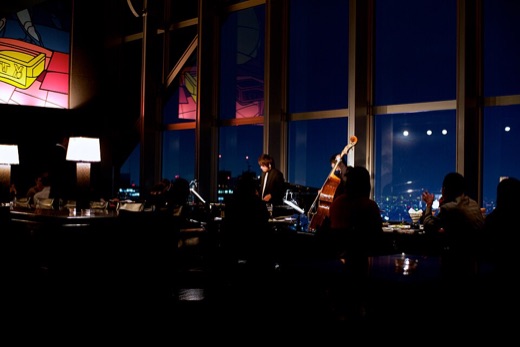
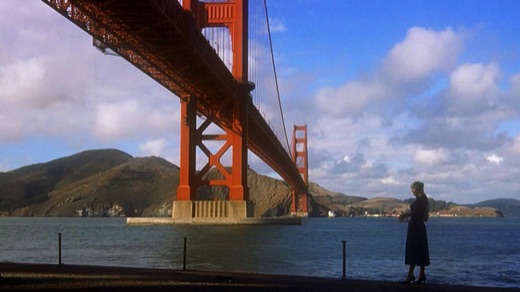
The feeling behind something we love offers a different kind of doorway. It can begin with a film, a song, a city, a photographer, a decade, or an architectural style, anything with a visual or emotional essence strong enough to serve as an anchor, and from there it can lead almost anywhere. The connections that matter most are often the ones no one would ever think to tag, the way the Riviera glamour of a 1950s thriller sits close to a Slim Aarons poolside, or the hush of a hotel bar in a Sofia Coppola film can lead you to a quiet place in Tokyo that never appeared on screen but holds exactly the same mood.
A new kind of search
During my time as an Entrepreneur in Residence at Greylock, that moment in the boardroom became the starting point for a natural language search product built around exactly this idea. People could explore rabbit holes of information the way curiosity naturally moves, beginning with a film, a photograph, or a half-formed feeling and following the interconnected threads that already exist across the web until they arrived somewhere unexpected and personal: a product that captured the same spirit, a restaurant with the right ambiance, a film they had never heard of, a piece of music that seemed to belong to the same world. The web had always contained these connections, buried in reviews, essays, images, and conversations, and for the first time they could be surfaced as a journey rather than a list of links.
What stayed with me most was how differently people behaved inside it. They lingered, they learned, and they came back, because inspiration came first and the discovery felt like a natural ending rather than the point.
Giving people words for what they love
The most meaningful thing a product like this can do is give people language for their own taste. A journey might begin with a practical wish, such as finding an outfit that captures the effortless polish of a favorite character, then drift into self-discovery as you start following the sensibility behind it, and end somewhere closer to self-education, with the quiet realization that you have loved 1980s sportswear, film noir, and Slim Aarons all along without ever seeing the thread between them.
That progression, from transaction to discovery to understanding, is the opposite of how most products are designed, and I think it is far more durable. Understanding what someone loves, offering them the vocabulary to name it, showing them what lives nearby, and keeping them connected to the things they find is a loop that rewards attention rather than consumption. It also invites play. When you can blend an Italian summer with the grit of grunge, or the 1980s with a Slim Aarons palette, you begin to approach the particular intersection of curiosity that belongs to you and no one else.
Translating style into lifestyle
Eventually a feeling wants to become something you can do, whether that means a piece to wear, a lamp for the corner of a room, a restaurant whose ambiance feels right, or a hotel that seems to have been designed by the same eye that shaped the film you love. Most commerce asks us to know the category before we can search for anything, but so much of what we want begins as a feeling we cannot yet articulate, and only becomes a product once we have seen enough visual context to recognize it. Search that understands our own language can carry that context all the way to the moment of choosing, so that a recommendation arrives with a reason attached rather than as one more result in a grid.
I believe inspiration will prove more powerful than transaction, and that films, music, and art will remain the most persuasive storefronts in the world for anyone patient enough to treat them that way.
Taste as a contribution
The last shift is cultural. Our platforms reward virality far more than taste, so most people broadcast what might spread rather than express what they genuinely love, and the long tail of people with a remarkable eye rarely gets the recognition it deserves. A shared sensibility can become a place to contribute something new, to name an aesthetic no one has named yet, to add a find that belongs inside a world someone else began, and to be recognized for the quality of your attention rather than the size of your audience. Along the way, it can quietly introduce you to the people standing nearest to you in taste, who are often the people you most wanted to meet.
The models have grown extraordinarily more capable since that afternoon in the boardroom, but the promise that moved me hasn’t changed: that technology could finally listen to us in our own words, and help us find not only what we were searching for, but a little more of who we are.