Jul 2024
Beyond the Camera and Keyboard
The idea that "the camera is the next keyboard" has been circulating in tech circles for years. It's a compelling concept that speaks to the shift towards more visual forms of communication and content creation. As we've seen with platforms like Pinterest, the camera has indeed become a powerful tool for information input and discovery.
But as we stand on the cusp of the AI revolution, it's worth considering what the next paradigm shift in creative interfaces might look like. While the camera has certainly changed how we interact with technology and share information, AI is poised to transform the creative process itself.
The race to design new interfaces that allow for easier creation is ongoing. However, the question arises: isn't AI just going to help us outsource things? The answer is nuanced. While AI will certainly aid in many aspects of creation, creative interfaces will still exist when it comes to tooling. AI can help make things a reality, but it can't replace the core of human creativity.
The enduring need for human input lies in storytelling. We still need to come up with the story - the beginning, middle, and end. Taste, creative vision, and the narrative that gets incepted from imagination into reality remain uniquely human domains. AI can be a powerful creative partner, but it's not here to replace taste, curation, or imagination.
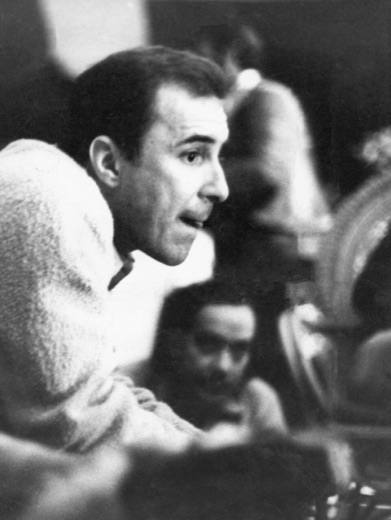
This balance between human creativity and technological aid reminds me of the meeting between Bernard Arnault and Steve Jobs. LVMH's legacy has lasted a lifetime, while technology is constantly changing. You can't change craft and legacy overnight with technology. But what technology can do is improve human efficiency.
Contrary to fears of overcreation, I'd argue that AI will allow us to focus more on the creative work. By outsourcing the mundane tasks that require structured data, AI frees us to concentrate on the aspects of creation that truly require human touch. It means we can leverage these tools to handle the minutiae that often takes away from the creative work we're trying to do.
This sentiment speaks to a larger truth: as our interfaces evolve, they should aim to enhance our lives and creativity, not add to our cognitive load. The future of creative interfaces isn't just about finding new ways to input information or create content. It's about designing tools that seamlessly integrate into our lives, support our creative processes, and allow us to focus on what truly matters - our ideas, our stories, our unique human perspective.
The camera may have become the new keyboard, but the next revolution in creative interfaces will likely be something we can't yet fully imagine - a fusion of AI assistance and human intuition that allows us to express our creativity more freely and naturally than ever before.
The Evolution of AI in Creative Industries
To put some of this into perspective, one of the best examples of AI as a transformative force is the impact the technology will have on the entertainment industry. As we transition from developing models for their own sake to building products supported by AI, we're witnessing a paradigm shift that promises to redefine how stories are told and experienced.
The integration of AI in filmmaking is not about replacing human creativity but enhancing it. As one industry insider notes, "AI will enhance human creativity in the creative profession, aimed to supercharge human creativity rather than replace it." This philosophy is driving the development of AI copilots for various creative professions, with a particular focus on the film industry.
One of the most promising applications of AI in filmmaking is the potential for personalized content creation. The long-term vision includes:
- Customized movie series based on individual preferences
- AI-generated content tailored to specific settings or aesthetics
- Potential for on-device movie generation
Imagine a scenario where someone on an eight-hour flight to Paris can instruct an AI to generate a rom-com series set in their destination city, perfectly timed to last the duration of their journey. This level of personalization could revolutionize how we consume media, creating truly bespoke entertainment experiences.
The development of AI-assisted tools for filmmakers and content creators is already underway. These tools can be designed to:
- Provide real-time visualization of text
- Offer multiple workspaces or canvases for creation
- Generate experimental scenes for approval (e.g., altering color schemes or settings)
- Incorporate user feedback into the creative process
- Use natural language processing to understand and visualize characters and scenes
- Search and alter stock imagery and B-roll for specific color schemes and visual styles
Community-Driven Content Creation
The future of AI in filmmaking isn't just about individual creators; it's also about fostering community-driven content creation. Platforms can be developed to:
- Generate AI content to populate feeds and avoid the critical mass problem
- Allow users to fork and remix existing creations
- Pose community-based prompts and challenges
- Implement modular, content-aware building blocks for creation
Implications for the Film Industry
The integration of AI in filmmaking raises important questions for the traditional film industry:
- How will studios adapt to a world where personalized content can be generated on-demand?
- What role will human storytellers play in an AI-augmented creative landscape?
- How can the industry balance the efficiency of AI with the irreplaceable human element in storytelling?
I remember seeing a quote on Twitter that read: "Films and plays and novels are meant to explore the human condition. Only we humans know what it is like to be us, to live and love and suffer." The challenge for the industry will be to harness the power of AI while preserving the uniquely human aspects of storytelling that resonate with audiences.”
For the film industry to thrive in this new era, several key steps are necessary:
- Embrace AI tools while ensuring they complement rather than replace human creativity
- Collaborate with writers and actors to create narratives that highlight the value of human-created stories
- Develop AI copilots in partnership with established screenwriters and filmmakers
- Explore new distribution models that can accommodate both traditional and AI-generated content
The integration of AI in filmmaking represents a significant shift in how stories are created, distributed, and experienced. While challenges remain, the potential for more personalized, efficient, and innovative storytelling is immense. As we move forward, the most successful players in the industry will be those who can effectively balance the power of AI with the irreplaceable human element of storytelling. The future of filmmaking is not about AI replacing human creativity, but about forging a new partnership between technology and human ingenuity. In this collaboration lies the potential for stories that are more personalized, more engaging, and more impactful than ever before.